O'zbekcha
 Русский
 English


M.D. Doctor of Medicine
The six-year Medicine programme, a bachelor-level programme at New Uzbekistan University, provides comprehensive, scientifically grounded medical training in accordance with internationally recognised educational principles based on German standards. The programme is conducted entirely in English and combines foundational medical sciences with early clinical practice, modern teaching methods, and competency-based learning.
Graduates acquire in-depth knowledge of medical theory, clinical skills, and professional and ethical competencies that prepare them for careers in medicine, further medical training, or international career opportunities.
International Academic Partnerships
The Medicine programme at New Uzbekistan University is being developed in partnership with leading German university hospitals and medical institutions. These collaborations provide academic guidance, institutional models, and international expertise in medical education, clinical training, research, and healthcare innovation.
The programme is supported by cooperation with:
- University Medical Center Freiburg
- Heidelberg University Hospital
- University Hospital Frankfurt
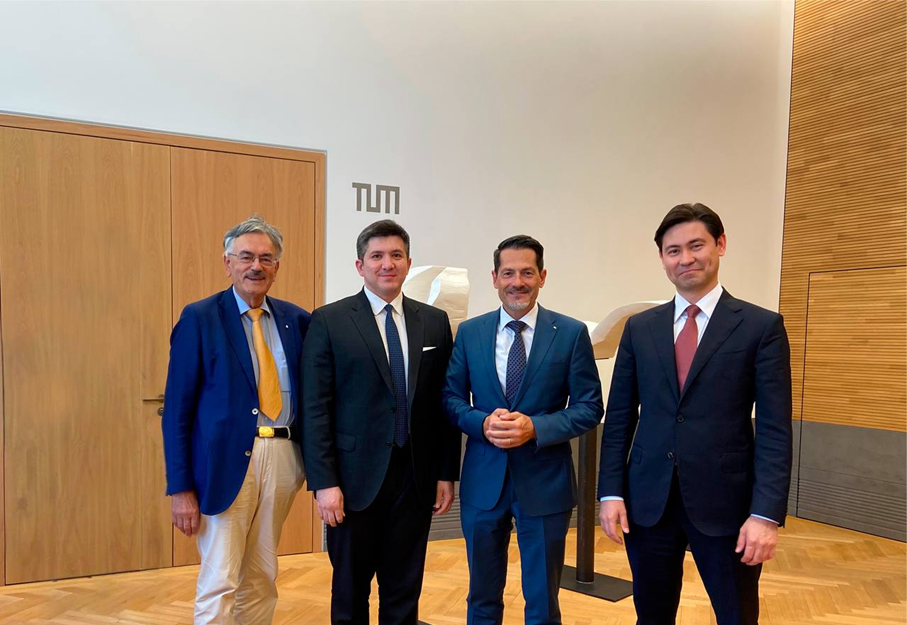
- Technical University of Munich School of Medicine
University Medical Center Freiburg – Integrated University Medicine Model
University Medical Center Freiburg serves as the principal institutional reference model for the project. Freiburg represents one of Germany’s leading university medical centres and demonstrates how an integrated university hospital system combines clinical care, medical education, and scientific research within a unified institutional structure.
Its interdisciplinary centres in oncology, cardiology, neurosciences, transplantation medicine, intensive care, and emergency medicine function simultaneously as treatment units, educational platforms, and research environments.
The partnership contributes expertise in:
- integrated university hospital structures;
- centre-based clinical management models;
- quality management and patient safety systems;
- integration of skills laboratories, simulation centres, and research units into clinical training.
These principles support the development of a modern university clinic in Uzbekistan designed according to internationally recognised standards.
Heidelberg University Hospital – Translational Medicine and Oncology
Heidelberg University Hospital contributes expertise in biomedical research, translational medicine, and comprehensive oncology care. Heidelberg is internationally recognised for its advanced cancer centre, strong clinical research infrastructure, and integration of molecular diagnostics and personalised medicine into everyday clinical practice.
The partnership supports the programme through:
- models for comprehensive oncology care;
- translational research structures linking scientific discoveries with clinical treatment;
- clinical trial governance and research ethics;
- integration of molecular diagnostics and precision medicine into clinical decision-making.
These elements contribute to the long-term development of research-oriented medical education and advanced clinical services in Uzbekistan.
University Hospital Frankfurt – Competency-Based Medical Education
University Hospital Frankfurt provides expertise in competency-based medical education, clinical skills training, and modern assessment systems.
Frankfurt is recognised for:
- structured undergraduate and residency training programmes;
- advanced skills laboratories and simulation centres;
- objective clinical assessment systems;
- innovative clinical teaching methodologies;
- faculty development and pedagogical innovation.
The collaboration supports the implementation of practice-oriented medical education with early clinical exposure and structured clinical training aligned with German medical education standards.
Technical University of Munich – Digital Medicine and Innovation
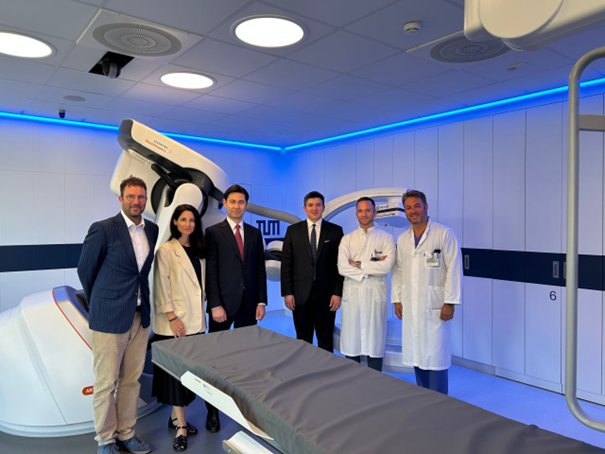
Technical University of Munich School of Medicine contributes expertise in digital medicine, medical technologies, and healthcare innovation.
The partnership focuses on:
- digitally integrated hospital systems;
- data-driven quality and outcomes monitoring;
- integration of advanced diagnostic technologies;
- artificial intelligence and digital healthcare solutions;
- innovation and technology transfer models.
These principles support the creation of a future-oriented academic medical environment capable of adapting to technological advances and evolving healthcare needs.
Applications for Fall 2026 are now open!
Start Your ApplicationThe study of Medicine combines classroom-based teaching with guided and independent self-study. Teaching takes place in a variety of formats, including lectures, seminars, practical exercises, skills labs, laboratory sessions, clinical training, case-based learning, and supervised clinical internships in real healthcare settings.
The programme is designed for a workload of 60 ECTS credits per academic year and follows a structured, sequential curriculum.
The study structure is based on internationally recognised curriculum principles aligned with German standards of medical education. Adjustments and further developments to the curriculum may be made based on regular evaluations, feedback from students and faculty, and external academic reviews.
|
Year 1 - Fundamentals of Medicine |
||||
|
Semester |
Course |
Course Content |
Course Type |
ECTS Credits |
|
Semester 1 |
Fundamentals of Medicine I |
Biology, chemistry, medical terminology |
Core |
10 |
|
Cell biology & genetics |
Cell structure, gene expression, heredity |
Core |
6 |
|
|
Introduction to scientific work |
Methodology, literature, statistics |
Core |
4 |
|
|
Medicine & society |
Ethics, professionalism, communication |
Core |
4 |
|
|
Practical Fundamentals I |
Skills Lab, Laboratory Fundamentals |
Core |
6 |
|
|
Semester 2 |
Fundamentals of Medicine II |
Biochemistry, Physics for Medical Professionals |
Core |
10 |
|
Anatomy I |
Musculoskeletal System |
Core |
8 |
|
|
Histology & Embryology |
Tissue, Development |
Core |
6 |
|
|
Practical basics II |
Skills Lab, Examination Techniques |
Core |
6 |
|
|
Total Credits |
60 |
|||
|
Year 2 – Structural & Functional Medicine |
||||
|
Semester |
Course |
Course Content |
Course Type |
ECTS Credits |
|
Semester 3 |
Anatomy II |
Organ systems |
Core |
10 |
|
Physiology I |
Cell, Muscle and Neurophysiology |
Core |
8 |
|
|
Biochemistry & Molecular Medicine I |
Metabolism, Enzymes |
Core |
6 |
|
|
Medical communication |
Conversation techniques, medical history |
Core |
6 |
|
|
Semester 4 |
Anatomy III |
Central & peripheral nervous system |
Core |
8 |
|
Physiology II |
Cardiovascular system, respiration, kidneys |
Core |
8 |
|
|
Biochemistry & Molecular Medicine II |
Signalling Pathways, Regulation |
Core |
6 |
|
|
Medical psychology |
Behaviour, doctor-patient interaction |
Core |
4 |
|
|
Practical Medicine I |
Clinical examination |
Core |
4 |
|
|
Total Credits |
60 |
|||
|
Year 3 – Disease Mechanisms & Clinical Fundamentals |
||||
|
Semester |
Course |
Course Content |
Course Type |
ECTS Credits |
|
Semester 5 |
Pathology & Pathophysiology I |
General pathology |
Core |
10 |
|
Microbiology & Immunology |
Infections, Immune System |
Core |
8 |
|
|
Pharmacology I |
Active ingredients, fundamentals |
Core |
6 |
|
|
Clinical Propaedeutics I |
Introduction to clinical thinking |
Core |
6 |
|
|
Semester 6 |
Pathology & Pathophysiology II |
Special Pathology |
Core |
10 |
|
Pharmacology II |
Therapeutic Principles |
Core |
6 |
|
|
Epidemiology & Public Health |
Prevention, Statistics |
Core |
6 |
|
|
Evidence-based medicine |
Study design, evaluation |
Core |
4 |
|
|
Clinical Propaedeutics II |
Diagnostic strategies |
Core |
4 |
|
|
Total Credits |
60 |
|||
|
Year 4 – Integrated Clinical Systems |
||||
|
Semester |
Course |
Course Content |
Course Type |
ECTS Credits |
|
Semester 7 |
Internal Medicine I |
Heart, lungs, gastroenterology |
Core |
10 |
|
Surgery I |
General & Visceral Surgery |
Core |
8 |
|
|
Diagnostic medicine |
Imaging, Laboratory |
Core |
6 |
|
|
Clinical Skills I |
Simulation, emergency training |
Core |
6 |
|
|
Semester 8 |
Internal Medicine II |
Endocrinology, Nephrology |
Core |
10 |
|
Surgery II |
Trauma & Orthopaedics |
Core |
8 |
|
|
Paediatrics |
Development, childhood diseases |
Core |
6 |
|
|
Clinical Skills II |
OSCE preparation |
Core |
6 |
|
|
Total Credits |
60 |
|||
|
Year 5 – Specialised clinical subjects |
||||||||
|
Semester |
Course |
Course Content |
Course Type |
ECTS Credits |
||||
|
Semester 9 |
Gynaecology & Obstetrics |
Women's Health |
Core |
8 |
||||
|
Neurology |
CNS disorders |
Core |
6 |
|||||
|
Psychiatry |
Mental disorders |
Core |
6 |
|||||
|
Dermatology |
Skin diseases |
Core |
4 |
|||||
|
Medical law & ethics |
Law, responsibility |
Core |
6 |
|||||
|
Semester 10 |
Anaesthesiology & Intensive Care Medicine |
Acute & Intensive Care |
Core |
8 |
||||
|
ENT & Ophthalmology |
Sensory Organs |
Core |
6 |
|||||
|
Urology |
Urogenital tract |
Core |
4 |
|||||
|
Radiology |
Diagnostic imaging |
Core |
6 |
|||||
|
General medicine |
Primary care |
Core |
6 |
|||||
|
Total Credits |
60 |
|||||||
|
Year 6 – Final Clinical Year |
||||||||
|
Semester |
Course |
Course Content |
Course Type |
ECTS Credits |
||||
|
Semester 11 |
Clinical Rotations I |
Internal medicine / surgery |
Core |
30 |
||||
|
Semester 12 |
Clinical rotations II |
Electives, specialisation |
Core |
20 |
||||
|
Transition to Practice |
Career preparation |
Core |
10 |
|||||
|
Total Credits |
60 |
|||||||
Educational Background
Applicants must have completed secondary school, academic lyceum, or professional college and provide diploma with academic transcripts.
Minimum English Proficiency
- IELTS 5.5 or;
- CEFR B2 (51 - 55) or;
- TOEFL iBT 46 (Only TOEFL iBT tests taken at approved test centers are accepted. The TOEFL iBT Home Edition is not accepted).
Note: If your English proficiency test certificate is not yet available, please upload it through your personal account by July 13, 2026.
Entrance Exam Requirement
Entrance Exam
Applicants are required to pass the Biology and Chemistry entrance exam.
Exams in both subjects are conducted in English.
Exam Format
Total Duration: 120 minutes
Total Number of Questions: 40 multiple-choice questions (20 questions per subject)
The use of mobile phones, electronic devices, or any unauthorized materials is strictly prohibited during the examination.
Calculators are allowed in the exam.
Calculator Policy
Allowed:
Standard calculators
Simple calculators
Non-graphic calculators
Scientific calculators
Not Allowed:
Models with internet access or wireless connectivity (Bluetooth, cellular, etc.)
Models with audio/video recording or playback, cameras, or smartphone-like features
Models with a computer-style (QWERTY) keyboard, pen input, or stylus
Models requiring an electrical outlet, making noise, or using paper tape
Programmable calculators
Calculators capable of plotting functions
Sample Questions
You can review the sample questions for both subjects in the files below to prepare effectively.
Exam_specification_Biology.pdf
Exam_specification_Chemistry.pdf
Admission Deadline and Exam Dates
Application deadline: 6 July 2026
Exam dates: 11–12 July 2026
Students are eligible to successfully complete the Doctor of Medicine (MD) programme if they meet all of the following requirements:
- Students must have achieved a cumulative grade point average (CGPA) of at least 2.00 at the end of the last semester;
- Students must have successfully earned 360 ECTS credits (or the number specified in the official study and module handbook);
- Students must have successfully completed all prescribed courses, clinical rotations and examinations of the programme;
- There must be no outstanding or incomplete achievements (e.g. "Incomplete" or "In Progress") in the transcript of records;
- Students must meet all university-wide and programme-specific requirements, including attendance and examination regulations;
- All degree requirements must be completed within a maximum period of seven (7) years, including approved leaves of absence, from the date of initial enrolment.
NOTE: The Doctor of Medicine (M.D.) degree is a bachelor-level medical degree. It does not constitute an academic doctorate. A doctorate (e.g. Dr. med. or PhD) requires separate academic research and an independent doctoral procedure.
Tuition Fee for 2026/2027 Academic Year
| Tuition Fee for 2026/2027 Academic Year | |
|---|---|
| Local students | 94 000 000 UZS per academic year |
| International students | $ 8 000 USD per academic year |
Scholarships
We are committed to supporting our students’ educational journeys through a variety of scholarship opportunities. Scholarships at New Uzbekistan University are categorized into two main types: 1-Year Scholarships and 4-Year Scholarships.
Graduates of the Medicine programme at New Uzbekistan University receive medical training that is aligned with German standards of medical education in terms of content and structure. The programme is based on the central principles of German medical education, in particular competence-based learning, early clinical integration and structured clinical training.
Graduates are thus well prepared to apply for further medical training (specialist training/residency) or clinical work at home and abroad.
In addition to a clinical career, further career prospects are available in medical research, public health, healthcare and health management, pharmaceutical and biomedical companies, and academia. The programme is taught in English and is oriented towards international and German quality standards, which also enables a high degree of international mobility.